
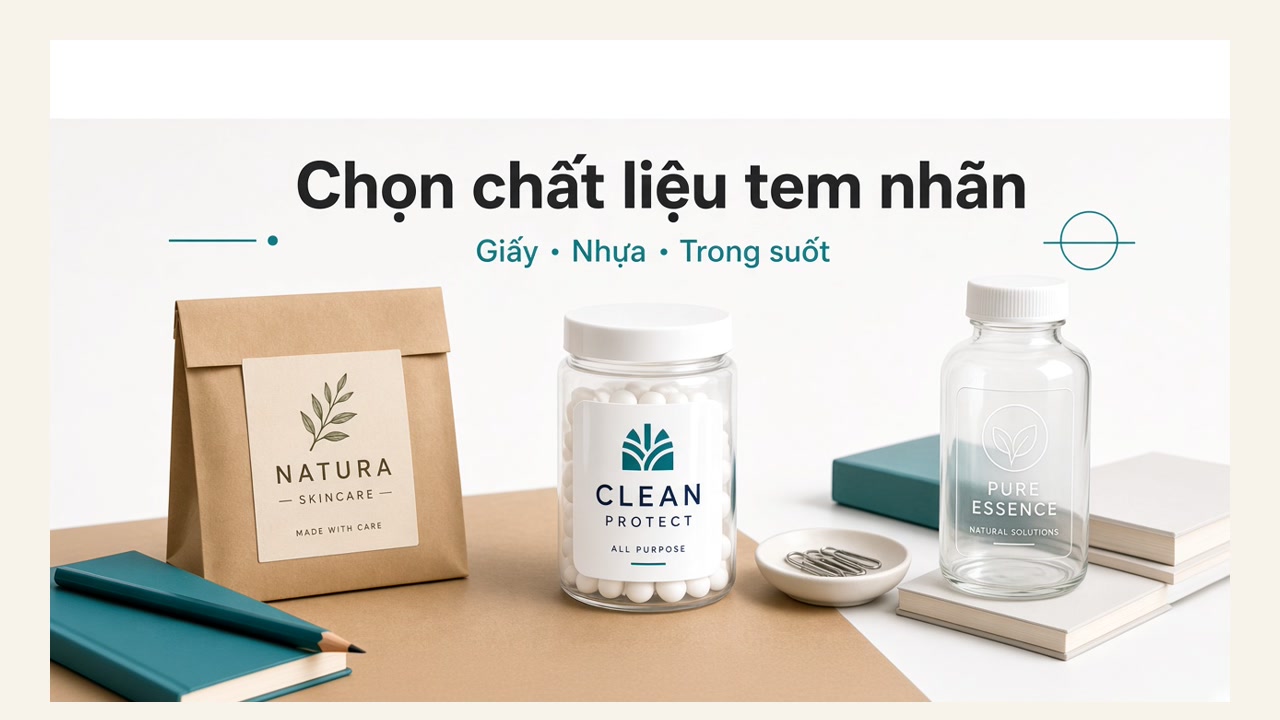
Choosing label materials: paper, plastic, or clear?
A decision framework by surface, environment, and budget — quick overview of paper, PVC/PP/PET plastic, and clear labels to avoid peel-off and ink bleed.
The wrong label material is a quiet but expensive mistake: kraft zip bags peel after a few days, glass jars in the fridge bleed ink, glossy foil pouches with paper stickers look temporary. Retail, fashion, cosmetics, mother & baby, grocery, and event brands all face the same question — should you choose paper, plastic, or clear labels?
This article does not lock you into one industry. It is a decision framework by application surface + storage environment + budget, then a short overview of three common label types so you can decide before designing and ordering.
Three questions before you pick a material
Answer them in order — most cases already point toward paper or plastic.
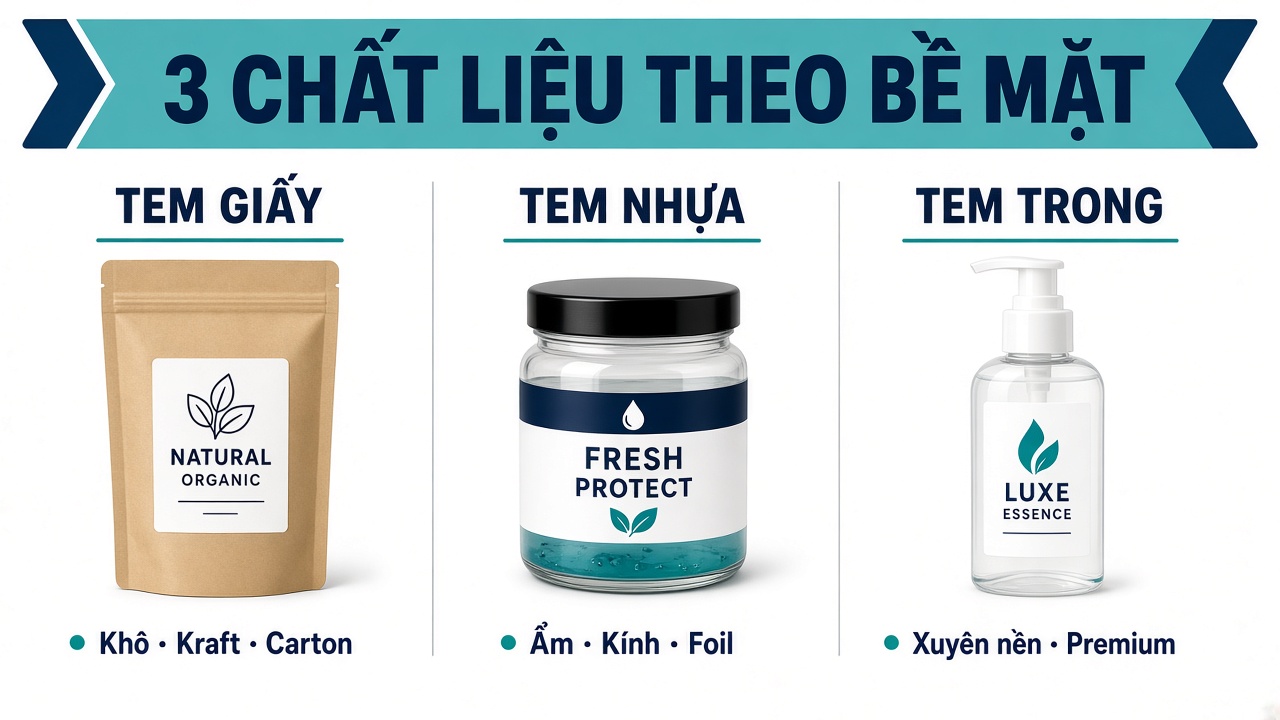
Three label materials by surface.
1. What surface will the label stick to?
Paper / kraft / dry carton: paper zip bags, carton boxes, kraft pouches, dry gift boxes — paper labels are often enough and grip slightly rough surfaces well.
Glossy plastic, foil, PET, glass: plastic bottles, glass jars, glossy zipper bags, foil pouches — lean toward plastic or clear labels.
Mica / clear packaging: when you want the product visible behind the label → clear / transparent labels are the aesthetic choice.
Do not choose a material only because it “looks good on a mockup.” Adhesive and face stock must match the real packaging you use.
2. What is the storage and shipping environment?
Dry, indoor, shelf display: paper labels are usually fine.
Humidity, freezing, oils, bathrooms, cool rooms: paper absorbs moisture, peels, and bleeds — prefer plastic (optionally with laminate).
Stacking and light impact in shipping: paper tears at the edges more easily; plastic holds up better.
If products move through multi-point retail (mini-markets, mother & baby stores, event pop-ups), account for warehouse humidity and customer handling — not only conditions at your own workshop.
3. What is the budget and order size for this run?
Paper is the cheapest option — good for pilots, new SKUs, and mid-size event gifts. Plastic typically costs about 1.5–2× paper for the same size (a material ratio, not a fixed price list). Some traditional printers require a minimum order quantity; on Printaz you can order from a single run with no MOQ — useful when testing a few samples before scaling.
Large, stable designs may suit offset; small runs or frequent artwork changes are often better with digital or roll labels in moderate lots. Lock the material first, then optimize the print method.
Three common label types — when to use each
Paper labels (paper decals)
Fit: paper packaging, kraft zip bags, carton, dry goods (dry snacks and tea, fashion accessories, gift stickers, education box labels, and similar).
Unfit: wet glass jars, freezer bags, humid storage, oily / cosmetic products that get handled with damp hands.
Pros
Lowest cost of the three.
Fast for small runs; easy die-cut custom shapes.
Good grip on slightly rough surfaces (kraft, coarse paper).
Cons
Not waterproof; moisture wrinkles the face and weakens adhesive.
Tears more easily on impact or after repeated peel tests.
If you are still testing logos or colors and packaging stays dry paper — paper labels are the thrifty, sufficient choice.
Plastic labels (PVC / PP / PET)
Fit: glass jars, plastic bottles, foil pouches, glossy zip bags, frozen goods, cosmetics, oily foods, shower / shampoo bottles, mother & baby products that need wipeable surfaces.
Pros
Waterproof and clearly more durable than paper.
Strong adhesion across glass, glossy plastic, and foil.
Sharp color; optional gloss or matte laminate for scratch and bleed resistance.
Cons
Roughly 1.5–2× the cost of paper at the same size.
Some traditional print shops batch jobs or require MOQ — while Printaz accepts small orders from 1, so you can test the real material before a large run.
When products may meet water, cold condensation, or oil — do not force paper to save money; reprint and returns usually cost more than the material upgrade.
Clear / transparent labels
Fit: glass jars, clear plastic bottles, mica, packaging where you want to “see through” the label to show product color or box artwork.
Pros
Premium, clean, modern look.
Still waterproof and durable like the plastic group.
Cons
Light-colored text or logos may need a white underprint so they do not disappear on a clear face.
Contrast must be designed carefully: the product behind the label becomes part of the visual.
Clear is not just “slightly more expensive plastic” — it is an aesthetic choice when packaging and product are the hero. If the box already has busy artwork, clear labels help you avoid covering that area.
Quick comparison by criteria
CriterionPaperPlastic (PVC/PP/PET)ClearWaterproofNoYesYesIdeal surfacesPaper, kraft, dry cartonGlass, glossy plastic, foil, frozenClear glass / bottles, micaRelative costLowest~1.5–2× paperSimilar to plastic + watch white underprintImpact durabilityMedium / tears easierHighHighWhen to chooseSKU tests, dry goods, tight budgetHumidity, oil, freezing, shipping impactShow the product, premium look
(Directional material guidance — not a price quote. Request Báo giá / a quote by real size and quantity.)
Industry hints (not locked to one vertical)
Retail / grocery: paper on dry carton; plastic for coolers. Fashion: paper or matte plastic on kraft; clear on mica. Cosmetics / mother & baby: prefer plastic or clear. Education / events: die-cut paper often enough; outdoor or water bottles → plastic. F&B / cup labels are one use case in a multi-industry picture.
Laminate, die-cut, and print method
After locking the face stock: gloss/matte laminate for scratch and bleed resistance; die-cut for fast peel-apply; high stable volume → consider offset; small / changing runs → digital or moderate roll lots.
A simple flow on Printaz
No specialized desktop design software needed. On Printaz pick a die template, edit in 2D, preview 3D / mockup layout, then order — no MOQ, from 1. Mockups help proportion; they are not a color soft-proof and not generative AI for final CMYK. Strict brand color → confirm when you Báo giá or approve a sample on the real material.
Closing
Order: surface → environment → budget → label type → laminate / die → quantity. Cheapest-first often means peel and reprints.
Deeper paper vs plastic: Paper vs plastic labels: when to choose which?.
Bắt đầu miễn phí on printaz.vn · Báo giá: [email protected].
Checklist before choosing a label.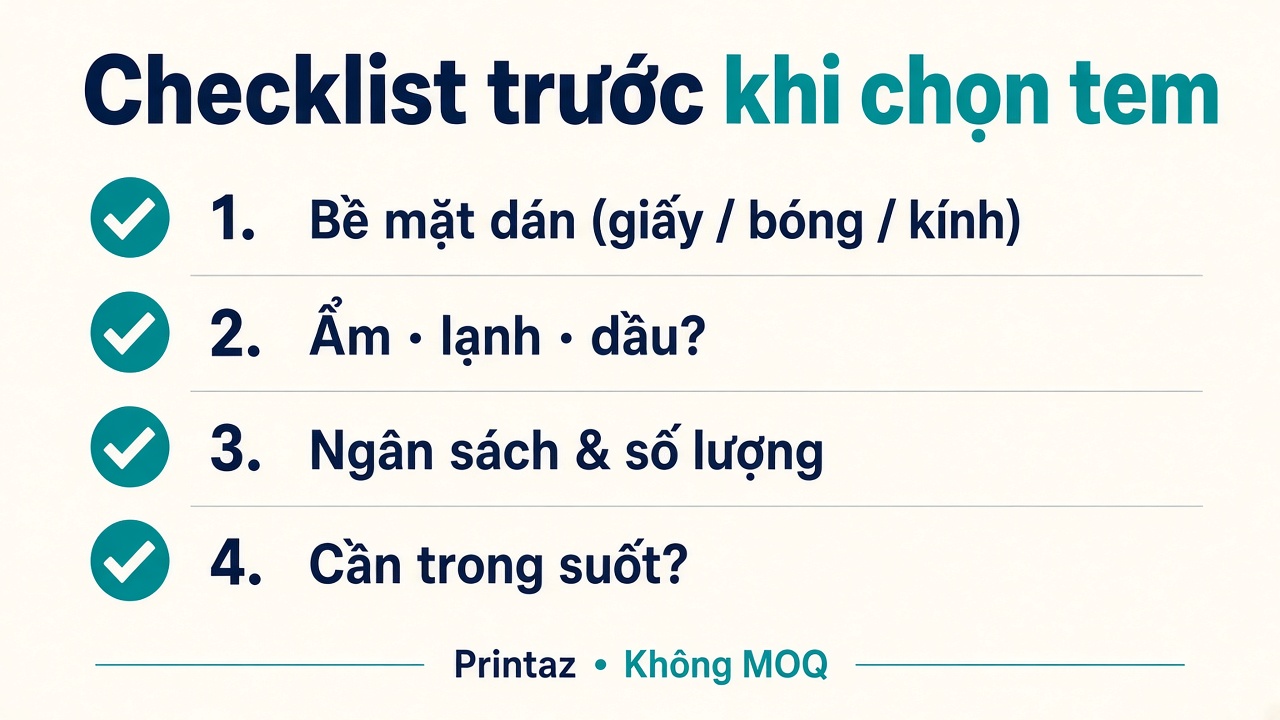
Share this article