
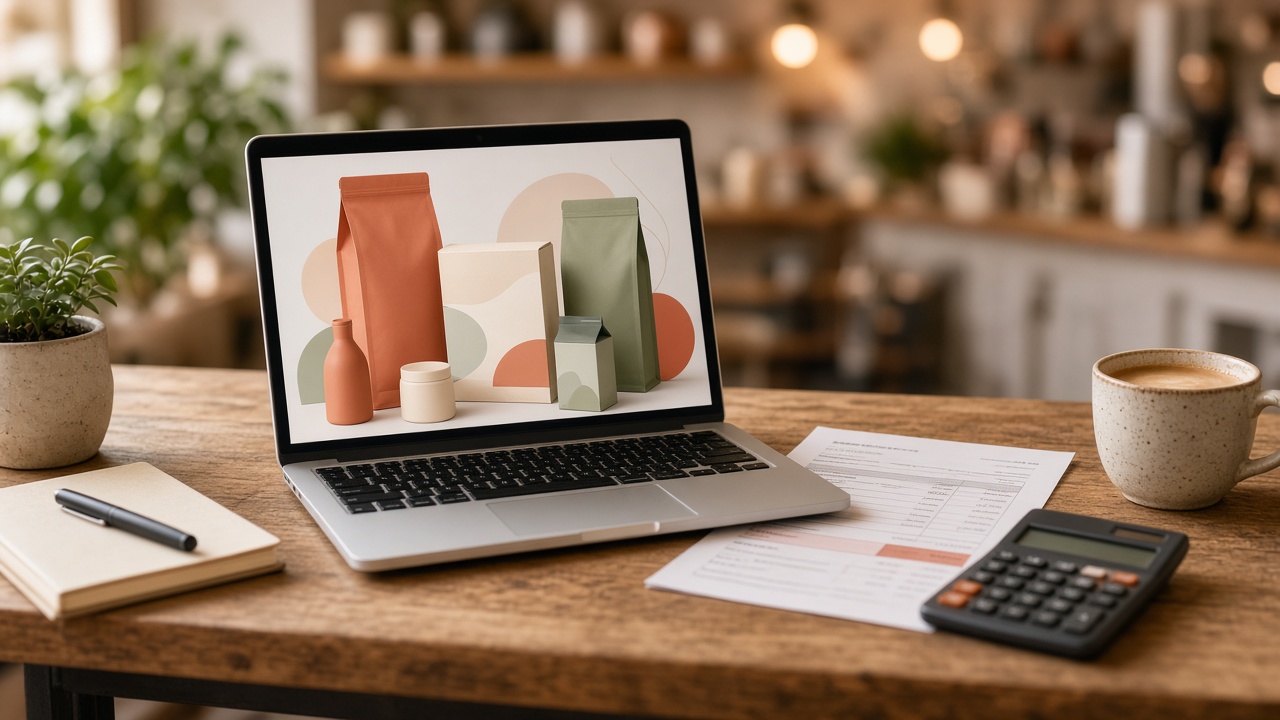
Hired a designer for a few million then every menu edit costs extra?
Constant F&B menu changes make repeating design hires expensive. How to keep a clean brand without bleeding revision fees when to hire, when to use a master template.
Many cafe, milk-tea, and takeaway bakery owners think: “Pretty packaging means hiring a designer.” One cycle of brief → concept → revisions → print file can cost a few million VND per design. Then next week the price changes, the promo slogan changes, the seasonal color changes — more edits, more fees.
The problem is not a weak designer. The problem is that F&B change frequency is far too high compared with a traditional design process. This post helps you see the real cost, when you should still hire, and when a master template saves more while keeping the brand clean.
F&B packaging is not “design once and forget”
Food & drink packaging lives on the sales calendar, not on a “finish identity then lock the file” calendar:
Menus change by season, toppings, combos, happy hours.
Openings / flash sales need a new slogan within a few days.
A 2–3 location chain wants consistent brand without a full-time designer.
Print runs are often medium/small — not enough to “fund” an expensive design retainer.
Hiring out is sensible for a first major identity. But every text edit on a takeaway box or bag/label that reopens a design contract means hidden costs quickly outrun printing cost.
Real cost is more than the design invoice
The design invoice is only the visible part. The more expensive part often sits outside the invoice:
Waiting for file edits (1–5 days per round): miss a combo window, miss new-menu photography.
Wrong file sent to the plant → printer returns it → another design round → sales schedule follows the designer’s schedule.
Missed promo sales windows because packaging is late, while a rival on the same street already hangs a new banner.
Version drift: “file final”, “final_v2”, “final_latest” — easy to print the old version on a bulk run.
A “pretty” design you cannot edit quickly is sometimes less valuable than a template that is good enough, on brand, and editable in one afternoon.
Situations shops often face
Weekly topping price changes: cup labels and pricing on takeaway bags must match. If every change waits on an external designer, shops often “leave the old text for now” — customers see mismatched prices, staff have to explain.
Weekend flash sale: you need “Buy 1 Get 1” on boxes/bags within 48 hours. Traditional hired design rarely keeps up; a master template can be edited immediately.
Opening another location: same logo, same die-cut frame, but different phone / address. You do not need to rebuild identity — you need a master with editable location fields.
When you should still hire a designer
Not everything should be DIY. Hire (agency or packaging freelancer) when:
You are building the core identity system (logo, color guidelines, tone, typography rules).
A major campaign, complex packaging, many SKUs launching together.
You need high-end illustration / photography, a new box structure, PVC windows, special finishes.
Old files are flattened, missing a die-line — need a production-ready rebuild.
Everything else: changing prices, item names, “Buy 1 Get 1” CTAs, running labels/bags/boxes on an existing frame — usually does not require opening Illustrator from scratch.
When to DIY / use a template
Changes sit only on the content layer: text, price, accent color, seasonal product photos.
You already have (or will build) a master template with correct die-cut, bleed, and type safe zone.
Change cadence is weekly/monthly — waiting on an external designer will miss the sales window.
Medium/small jobs: edit time should not exceed the value of the print order.
How small shops keep brand quality without bleeding design budget
Have a master template for each packaging type (box, bag, label…).
Edit only the content layer: text, price, accent color — keep the die-cut and bleed.
Preview / mockup before print; run a small proof before bulk.
Keep the master and name versions clearly (for example
hop-takeaway-v3-2026-09) so next time you are not rebuilding from zero.Separate roles: the shop (or a project designer) owns brand/content; the printer owns tech and finishing.
Checklist before you decide to hire or self-edit
Does this change touch the logo / guidelines / box structure? → If yes, consider hiring.
Only changing text/price/slogan on an existing frame? → Prefer a template.
How long until the sales deadline? Under 3–5 days, an external hire cycle is often late.
Do you have a master on the correct die-line? If not, this round can hire to build the master — next rounds you self-edit.
Small print order but many revision rounds? → Hidden design cost will outrun print cost.
Quick FAQ
Can I hire a designer once and then self-edit? Yes — if the contract hands over a master file (layered / correct die-cut), not only a pretty image. Spell out the right to edit content later.
Do templates make the brand look “cheap”? A “cheap” look usually comes from a distorted logo, chaotic color, type against the edge — not from using a template. A guideline-correct template even helps multi-location consistency.
Is it okay if the printer edits for us? Fine for large jobs or technical adjustments. For frequent text changes, plant dependency easily creates wait loops and version drift.
Quick estimate: repeating hires vs keeping a master
Suppose each small edit round (price / slogan) costs 500,000–1,500,000 VND externally and waits 2–4 days. If an F&B menu changes 1–2 times/month, in one quarter you can spend the equivalent of several new designs — while the content change is only a few lines of text. Keeping a master + self-editing (or having an internal person edit on the template) is usually clearly cheaper on the “repeat edits” part; design budget should go to identity builds / major campaigns.
Where does Printaz sit in this problem?
Printaz supports exactly what shops need when packaging/menus change constantly (F&B and many other categories): design packaging on the web from templates, edit in 2D, preview, export print-ready files or place a print order — reducing dependency on repeating design hires for small changes. The printer still does what they do best: print and finish. The shop keeps the edit rhythm and the master.
Try it on printaz.vn · ask for a quote / advice: [email protected].
Share this article